

Hey there! As a supplier of egg tray machines, I often get asked about the pressure range in the forming process of these machines. It's a crucial aspect that can significantly impact the quality and efficiency of egg tray production. So, let's dive right in and explore this topic in detail.
First off, let's understand why pressure is so important in the egg tray forming process. The main goal of the forming process is to shape the wet pulp into the desired egg tray shape and then remove as much water as possible to ensure the trays are strong and durable. Pressure plays a key role in both of these aspects. It helps to compress the pulp, giving the trays their proper shape and density, and also squeezes out the excess water, reducing the drying time.
Now, the pressure range in an egg tray machine can vary depending on several factors. One of the most significant factors is the type of egg tray machine. We offer different types of egg tray machines, such as the 4 - side Egg Tray Machine, the 1 - side Egg Tray Machine, and the 8 - side Egg Tray Machine. Each of these machines has its own unique design and functionality, which can affect the pressure requirements.
For a 1 - side egg tray machine, the pressure range typically falls between 0.5 to 1.5 MPa (megapascals). This relatively lower pressure is sufficient because the forming process on one side is less complex compared to multi - side machines. The 1 - side machine is often used for simpler egg tray designs and is more suitable for small - scale production. The lower pressure also helps to prevent over - compression of the pulp, which could lead to a brittle and less - absorbent egg tray.
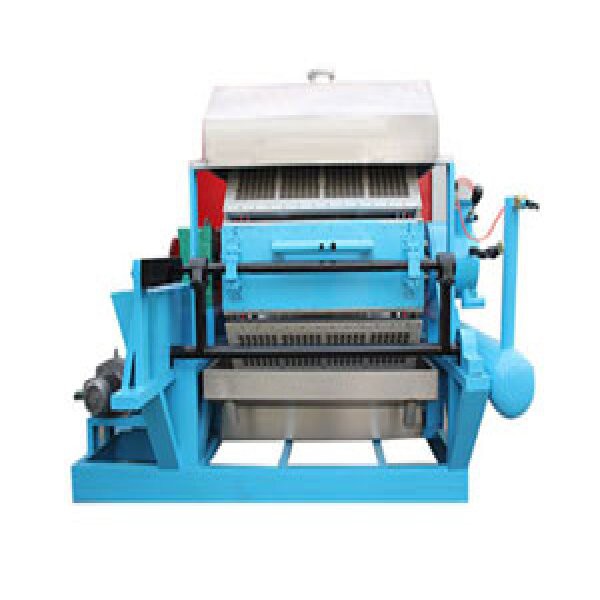

On the other hand, a 4 - side egg tray machine usually requires a higher pressure range, around 1.5 to 2.5 MPa. This is because it has to form the trays on four sides simultaneously, which demands more force to ensure a uniform shape and proper compaction of the pulp. The increased pressure helps to create a more rigid and well - defined egg tray, which is important for stacking and transporting eggs safely.
The 8 - side egg tray machine, being the most advanced and capable of producing more complex and high - quality egg trays, needs an even higher pressure range. It typically operates at pressures between 2.5 to 3.5 MPa. The high pressure is necessary to form the trays on eight sides accurately and to achieve a high level of density and strength in the final product. This type of machine is ideal for large - scale production facilities that require a high volume of high - quality egg trays.
Another factor that affects the pressure range is the type of pulp used. Pulp can be made from different materials, such as recycled paper, cardboard, or wood chips. Each material has its own physical properties, such as fiber length, density, and moisture content, which can influence the pressure needed for forming. For example, pulp made from recycled cardboard may require a higher pressure compared to pulp made from recycled office paper because cardboard fibers are coarser and more rigid.
The moisture content of the pulp is also a critical factor. If the pulp has a high moisture content, more pressure will be needed to squeeze out the excess water. Conversely, if the moisture content is low, less pressure may be sufficient. However, it's important to find the right balance because too much pressure on low - moisture pulp can cause the trays to crack or become too hard.
The design and thickness of the egg trays also play a role in determining the pressure range. Thicker trays generally require more pressure to form properly as more pulp needs to be compressed. Similarly, trays with complex designs, such as those with multiple compartments or special shapes, may need higher pressure to ensure all the details are accurately formed.
Now, let's talk about how to adjust the pressure in an egg tray machine. Most modern egg tray machines are equipped with pressure control systems that allow operators to adjust the pressure according to the specific requirements of the production process. These systems are usually automated and can be programmed to maintain a consistent pressure throughout the forming process.
However, it's important to note that adjusting the pressure is not a one - time thing. Operators need to monitor the quality of the egg trays regularly and make adjustments as needed. For example, if the trays are coming out too soft or have a poor shape, the pressure may need to be increased. On the other hand, if the trays are cracking or showing signs of over - compression, the pressure should be reduced.
In addition to the forming pressure, there is also the pressure used in the dewatering stage. After the pulp is formed into the tray shape, it still contains a significant amount of water. Dewatering pressure helps to remove this water quickly and efficiently. The dewatering pressure is usually lower than the forming pressure and can range from 0.2 to 0.5 MPa. This lower pressure is sufficient to start the water removal process without damaging the newly formed trays.
Maintaining the right pressure range is essential for the long - term performance of the egg tray machine. If the pressure is too high, it can put excessive stress on the machine's components, leading to premature wear and tear. This can result in increased maintenance costs and downtime. On the other hand, if the pressure is too low, the egg trays may not be formed properly, leading to a high rejection rate and lower productivity.
As a supplier of egg tray machines, we understand the importance of providing our customers with machines that can operate within the optimal pressure range. Our machines are designed and manufactured using the latest technology and high - quality materials to ensure reliable and efficient performance. We also offer training and support to our customers to help them understand how to adjust and maintain the pressure in their egg tray machines.
If you're in the market for an egg tray machine, whether it's a 1 - side, 4 - side, or 8 - side machine, we're here to help. We can provide you with detailed information about the pressure requirements of our machines and how they can meet your specific production needs. Contact us today to start a conversation about your egg tray production requirements. We're ready to work with you to find the best solution for your business.
References
- Industry reports on egg tray manufacturing technology
- Technical manuals of egg tray machines