

1. Where Is the Demand for Egg Trays Coming From in 2027?
Egg trays are widely used by poultry farms, egg distributors, wholesalers, and retailers for collecting, storing, and transporting eggs. As egg production and distribution continue to grow, the demand for reliable packaging remains an important part of the supply chain.
For new investors, potential customers may include local poultry farms, egg collection centers, wholesalers, and packaging distributors. Before investing, research their purchasing volumes, current prices, and existing suppliers.
A large market does not automatically mean high profits. Stable customers, competitive production costs, and reliable delivery are essential to building a profitable business.
2. What Does It Cost to Start an Egg Tray Factory?
The initial investment depends on production capacity, automation level, drying method, workshop conditions, and installation costs. The main expenses include equipment, raw materials, energy, labor, and daily operations.
Equipment Investment
A complete egg tray production line may include:
- Pulping equipment: Processes waste paper and other fiber materials into pulp slurry.
- Forming machine: Forms wet egg trays through vacuum suction and molds.
- Drying system: Removes moisture from wet trays.
- Hot pressing and packaging equipment: Finishes and prepares products for delivery where required.
The total equipment investment varies according to output, automation, and drying configuration. Transportation, installation, and workshop preparation should also be included in the budget.
Raw Material and Operating Costs
Waste paper, such as old newspapers, cardboard, and used cartons, is commonly used in egg tray manufacturing. Purchasing prices, transportation distance, and fiber quality affect raw material costs.
Other expenses include electricity, water, fuel, labor, workshop rent, equipment maintenance, and packaging. These should be estimated using local prices and expected production volume.
3. How Does Drying Affect Egg Tray Production Costs?
Drying is an important part of egg tray manufacturing. The method selected affects production speed, labor requirements, energy consumption, and delivery schedules.
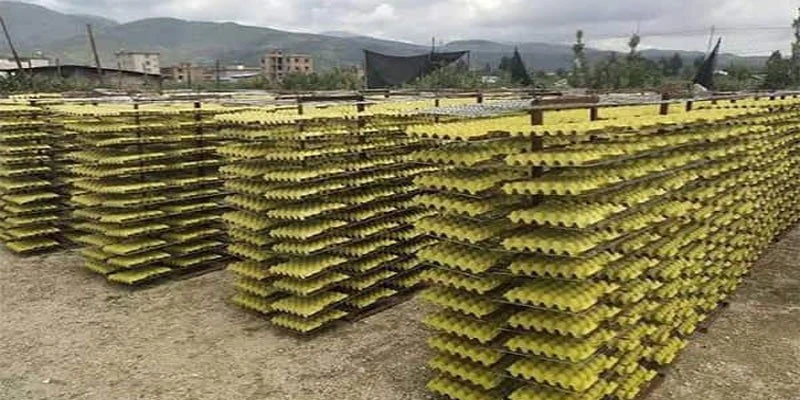
Natural Drying
Natural drying uses sunlight and air circulation to remove moisture. It requires less investment in drying equipment and may suit small factories in areas with favorable weather.
However, it may take 2–3 days and requires sufficient space. Rain and high humidity can also interrupt production.
Heated Drying
Heated drying systems use controlled heat and airflow to remove moisture more quickly. Depending on the configuration, drying may take approximately 20–30 minutes, making this method more suitable for continuous production.
Fuel options may include coal, diesel, natural gas, and LPG, depending on the dryer design and local energy availability.
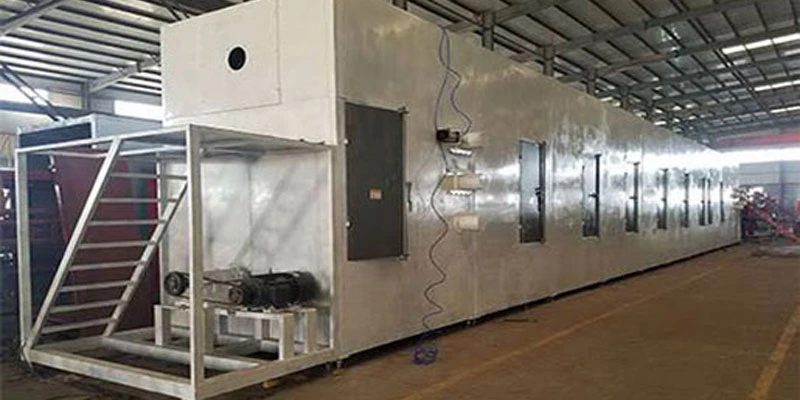
When comparing drying methods, consider equipment investment, energy costs, labor, space, and production efficiency rather than equipment price alone.
4. How Do Egg Tray Manufacturers Generate Revenue?
An egg tray factory's revenue depends not only on production capacity but also on its ability to find buyers and secure regular orders.
Direct Sales to Poultry Farms
Poultry farms and egg producers need packaging for daily egg collection and transportation. Building direct relationships with local farms can reduce reliance on intermediaries and create repeat business.
Supplying Wholesalers and Distributors
Wholesalers and packaging distributors often serve multiple farms and retailers. Their orders may involve larger volumes, helping manufacturers expand their market coverage, although unit prices may be more competitive.
Building Long-Term Supply Relationships
Regular supply agreements make production planning easier and reduce uncertainty in monthly sales. Maintaining product quality, competitive prices, and reliable delivery helps encourage repeat orders.
Manufacturers can also develop customers through local packaging dealers, agricultural supply networks, trade exhibitions, and online B2B platforms.
5. How to Calculate Egg Tray Profit and Break-Even Sales
To evaluate profitability, compare the selling price with variable production costs and monthly fixed expenses.
Example: Monthly Profit Calculation
Assume a factory sells 100,000 egg trays per month at $0.08 per tray.
| Item | Example |
| Monthly sales volume | 100,000 trays |
| Selling price | $0.08 |
| Monthly revenue | $8,000 |
| Variable cost per tray | $0.05 |
| Contribution per tray | $0.03 |
| Monthly fixed costs | $2,000 |
| Monthly operating profit | $1,000 |
Calculation:
- Monthly Revenue = 100,000 × $0.08 = $8,000
- Total Variable Costs = 100,000 × $0.05 = $5,000
- Operating Profit = $8,000 − $5,000 − $2,000 = $1,000
Break-Even Sales Volume
The break-even point is the sales volume required to cover fixed costs.
Break-Even Sales = Monthly Fixed Costs ÷ Contribution per Tray
$2,000 ÷ $0.03 = Approximately 66,667 trays per month
Under these assumptions, the factory needs to sell approximately 66,667 trays per month to cover its fixed costs. Sales above this level can generate operating profit if other conditions remain unchanged.
Note: These figures are illustrative only, not industry averages or guaranteed earnings. Actual results depend on local selling prices, raw material and energy costs, labor, equipment utilization, and customer orders. Equipment investment, financing, taxes, and depreciation should also be considered when calculating total investment returns.
6. What Factors Affect Egg Tray Business Profitability?
Several factors directly influence an egg tray factory's profit margin:
- Raw material supply: Stable local waste paper suppliers help control purchasing and transportation costs.
- Drying efficiency: Suitable drying equipment helps maintain production speed and reduce weather-related interruptions.
- Equipment utilization: Production capacity should match actual orders to avoid equipment idling or insufficient output.
- Product quality: Consistent tray strength and dimensions help retain customers and secure repeat orders.
- Transportation and payment terms: Delivery costs and payment periods affect profit margins and cash flow.
7. How to Choose the Right Egg Tray Production Line?
The right production line should match your market demand, investment budget, workshop conditions, and future expansion plans.
Match Capacity with Orders: Estimate how many trays you can realistically sell each day or month. Avoid investing in excessive capacity before establishing a stable customer base.
Choose the Automation Level: Manual, semi-automatic, and fully automatic lines differ in investment, labor requirements, and production efficiency. Consider local labor costs and expected output when choosing.
Select a Suitable Drying System: Natural drying may suit small projects in favorable climates, while heated or automatic drying is generally more suitable for continuous production.
Consider the Complete Production Process: Pulping, forming, drying, hot pressing where required, and packaging should work together to support stable production.
8. Plan Your Egg Tray Manufacturing Business
A profitable egg tray manufacturing business requires more than suitable equipment. Stable orders, reasonable operating costs, consistent product quality, and efficient production all contribute to long-term success. The production line should be planned around your target market, expected output, raw materials, workshop conditions, and investment budget.
If you are considering an egg tray manufacturing project, contact AGICO to discuss your production requirements and equipment configuration.