

In the poultry and egg industry, egg trays are essential protective packaging. Their specialized and large-scale production is crucial for the safe and efficient distribution of eggs. Establishing a modern egg tray manufacturing plant is a complex project. It involves market, technology, management, and financial considerations. This guide outlines the key steps and implementation points.
1. Forward-Looking Planning and Market Positioning
A successful factory starts with precise strategic positioning. Investment decisions must be based on deep regional market research. Core areas to examine include:
Market Demand Analysis
Accurately measure the concentration and scale of the poultry farming industry in your target region. Analyze consumer habits and growth trends. Evaluate the capacity, product range, and service capabilities of existing packaging suppliers.
Your Own Positioning
Based on research data, define your core customer groups. These could be large breeding companies, egg distribution centers, or supermarket chains. Then, determine your initial production capacity, product mix (sizes, load capacity, colors), and differentiation strategy.
Location is fundamental for long-term cost advantages. An ideal site should meet these conditions:
Competitive Landscape
Identify the strengths and weaknesses of main competitors. Understand their product types (recycled pulp, fresh pulp, etc.), pricing strategies, customer base, and market share.
Supply Chain Synergy
Be close to waste paper collection points or pulp suppliers. Also, proximity to key customers helps optimize logistics costs.
Adequate Infrastructure
Ensure sufficient power capacity, water supply, drainage systems, and road networks meet production needs.
Compliance
Confirm the land is zoned for industrial use. Pass an environmental impact assessment early to smooth the approval process.
2. Compliance Approvals and Core Resource Integration
The project must follow legal procedures. The primary task is to advance government approvals and supply chain setup simultaneously.
Administrative Permits: Obtain the "Land Use Planning Permit," "Construction Planning Permit," and "Construction Work Permit" in sequence. Crucially, prepare and submit a professional "Environmental Impact Assessment Report." Ensure standards for wastewater, exhaust gas, and noise emissions comply with local regulations to avoid policy risks.
Building the Supply Chain
Raw Materials: Establish long-term partnerships with qualified waste paper stations or pulp mills. Sign long-term agreements to secure stable prices and quality, ensuring consistent raw materials.
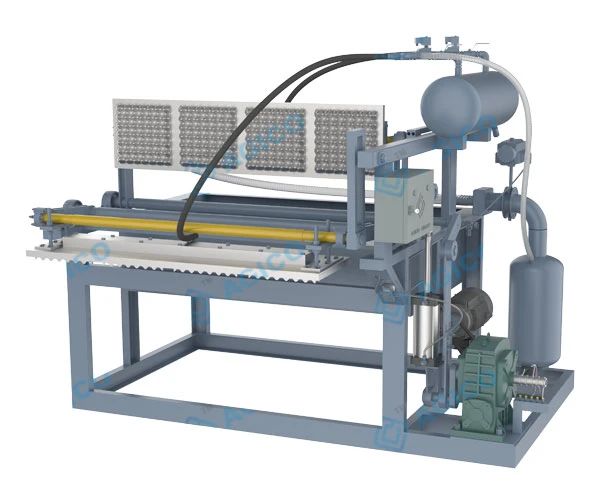
Production Equipment: Select equipment based on capacity and product plans. Evaluate molding machines, drying lines, and automated stacking systems globally. Key factors are technical maturity, energy consumption, output efficiency, and supplier after-sales service. Prioritize modern equipment with energy recovery and closed-loop process control features.
3. Process-Based Factory Design and Production Line Planning
Factory layout should follow the production workflow. This ensures smooth logistics and maximum efficiency.
Functional Zoning
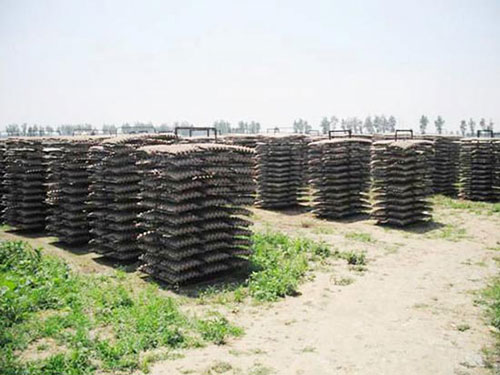
Clearly define areas for raw material storage, pulping, molding, drying, pressing/packaging, and finished goods storage. Material flow should be designed for one-way movement to avoid cross-contamination and backtracking.
Production Line Technology
Balance the level of automation with return on investment. Modern pulp molding lines offer full automation from feeding and molding to hot pressing and stacking. While the initial investment is higher, they significantly reduce labor costs and improve product consistency and output.
Sustainable Design
Integrate energy-saving and carbon reduction ideas from the start. Examples include selecting drying equipment with waste heat recovery, installing rooftop solar panels, and designing water recycling systems. This lowers overall energy and water consumption during operation.
4. Construction and Production Line Integration
This phase turns blueprints into reality.
Civil Works and Utilities: Strictly follow design drawings during construction and supervision. Ensure the building structure, load-bearing capacity, and height meet equipment installation and production needs. Complete supporting projects like power supply, water pipelines, and compressed air systems concurrently.
Equipment Installation and Debugging: Install equipment precisely under the guidance of supplier technicians. Afterwards, conduct systematic linkage debugging and trial production. The goal is to verify equipment coordination. Optimize process parameters (like pulp concentration, vacuum level, mold temperature, and pressure) through test runs. Ensure the final egg trays meet design standards for strength, appearance, and hygiene.
5. Lean Production and Quality System Building
The core of the operational phase is establishing stable and efficient management systems.
Organization and Talent: Build a team with professional backgrounds in production, equipment management, and quality control. Provide ongoing skills training. Ensure the team masters Standard Operating Procedures and safety protocols.
Comprehensive Quality Management: Implement a quality control system from source to finished product. Set strict standards for raw material inspection. Monitor key process parameters during production. Perform regular physical tests on finished products (like drop strength, puncture resistance, moisture content). Use data recording and analysis to enable traceability and continuous improvement.
6. Excellent Operations and Continuous Improvement
Integrating maintenance and optimization into daily operations ensures long-term competitiveness.
Predictive Equipment Maintenance: Implement a preventive maintenance system. Create detailed daily, weekly, monthly, and annual maintenance plans. Keep a stock of critical spare parts to minimize unexpected downtime.
Process Optimization and Innovation: Encourage the technical team to continuously improve processes. Explore ways to increase efficiency and reduce waste. Actively research new eco-friendly formulas. Improve the use of recycled fiber. Optimize wastewater recycling technology. Strive to build a resource-efficient and environmentally friendly green factory.
Building a competitive egg tray production plant is a systematic project where each step connects. It requires investors to have forward-looking market insight. It also demands professionalism and attention to detail in technology selection, construction, and operational management. Only through careful planning and scientific execution can you build a modern manufacturing business. Such a business should consistently create value for customers, achieve profitability, and ensure sustainable development.