

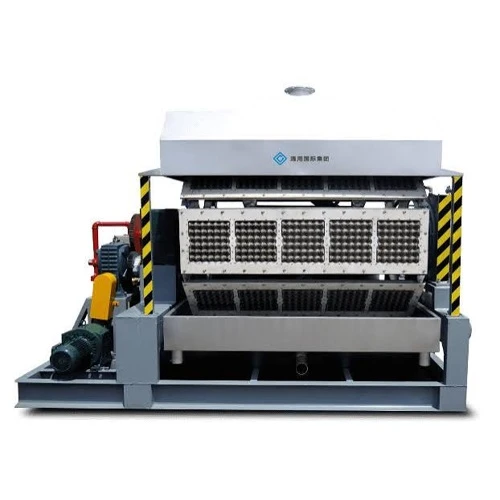
Seedling Tray Manufacturing Machine
AGICO's seedling tray manufacturing machine is designed for producing molded pulp trays for nurseries, horticulture, and plant propagation. Different tray specifications can be developed through product-specific mold design and suitable machine configuration.
From compact multi-cell trays to larger nursery trays with deeper cavities, production planning needs to account for tray dimensions, mold layout, forming capacity, and drying requirements. AGICO provides seedling tray forming equipment and supporting systems to help manufacturers establish a production line suited to their product designs and output targets.
Request a Machine Configuration
Different Tray Designs Require Different Manufacturing Considerations
Seedling trays vary in cavity number, depth, spacing, and supporting structure. These features influence mold design, forming performance, and the structure of the finished tray.
| Tray Design Factor | What It Means for Production |
| Cell arrangement | Determines how cavities are distributed across the mold |
| Cavity depth | Affects mold geometry, pulp distribution, and product release |
| Cell spacing | Influences tray layout and material between cavities |
| Drainage openings | Must be incorporated into the design where required |
| Overall dimensions | Determine the required forming area and mold size |
| Tray edges and supporting ribs | Affect product strength, handling, and stacking |
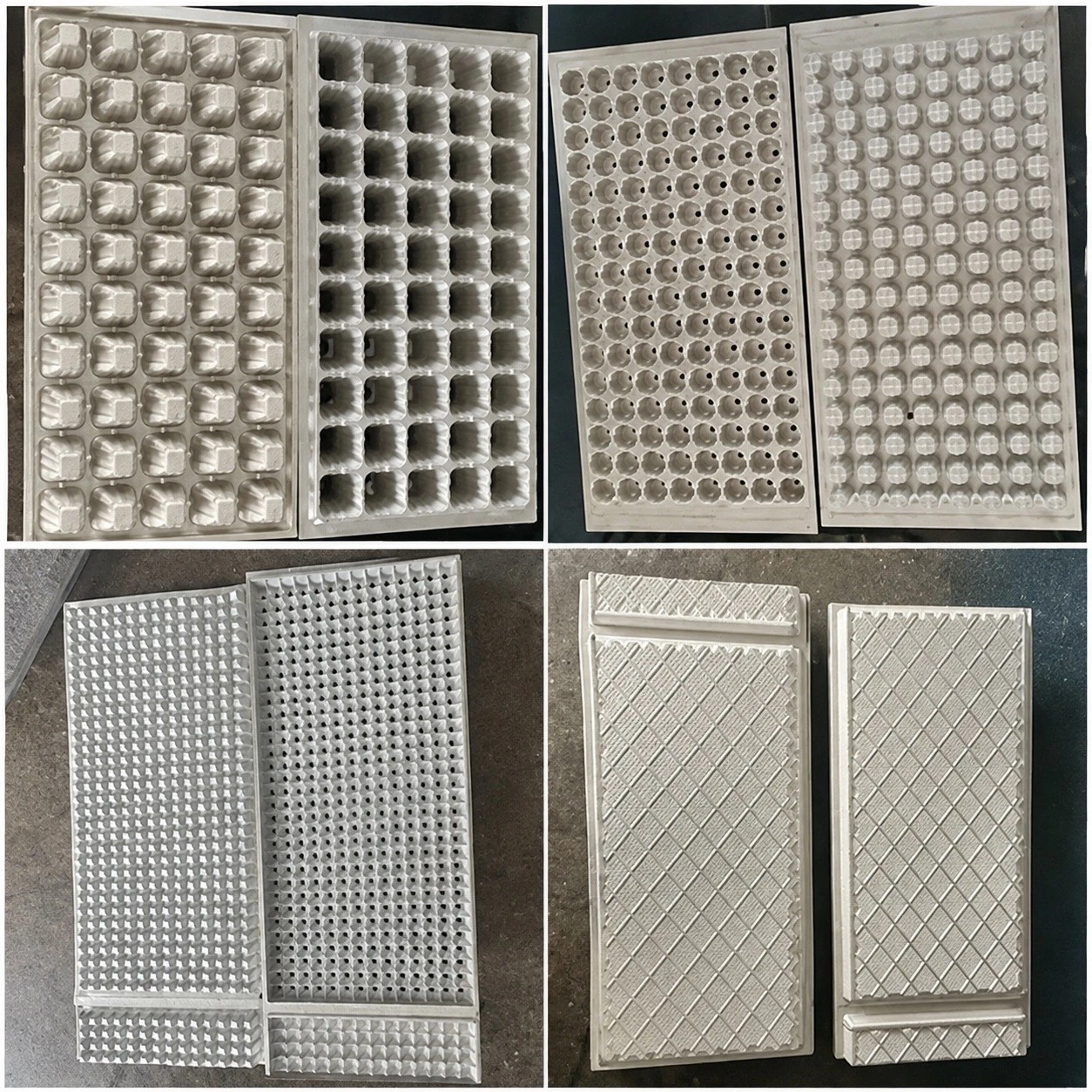
How Molded Pulp Seedling Trays Are Produced
The process begins with preparing suitable fiber pulp. Vacuum forming then draws the fibers against the mold surface to create the tray's shape and cavity pattern.
After forming, wet trays are transferred to a drying system to remove moisture and stabilize their shape. Additional finishing or hot pressing may be considered according to product requirements.
Typical production sequence:
Pulp Preparation → Molded Tray Forming → Wet Tray Transfer → Drying → Inspection and Packing
AGICO Seedling Tray Manufacturing Machine Specifications
| Model | DT4x1 | DT4x4 | DT4x8 | DT5x8 | DT6x8 | DT8x8 | |
| Capacity(pcs/h) | 1000-1500 | 2500-3000 | 4000-4500 | 5000-5500 | 6000-7000 | 8000-9000 | |
| Mold Quantity | 4 | 16 | 32 | 40 | 48 | 64 | |
| Total Power(kW) | 38.6 | 88.2 | 148.2 | 208.7 | 273.2 | 374.2 | |
| Worker Demand | 2-3 | 4-6 | 4-6 | 4-6 | 5-7 | 5-7 | |
| Material Consumption | Paper(kg/h) | 102 | 200 | 320 | 425 | 520 | 640 |
| Water(kg/h) | 306 | 440 | 704 | 748 | 1144 | 1280 | |
| Fuel Consumption | Natural Gas(m³/h) | 26-36 | 48-58 | 60-70 | 75-85 | 90-100 | 120-130 |
| LPG(kg/h) | 22-32 | 37-44 | 47-54 | 58-65 | 69-77 | 93-100 | |
| Diesel(kg/h) | 22-32 | 40-50 | 48-58 | 60-70 | 67-77 | 90-100 | |
These figures are for reference. Actual output and consumption depend on tray design, raw materials, mold configuration, operating conditions, and production line arrangement. Fuel consumption varies by drying system and energy source. Confirm the applicable technical specifications before ordering.
Request Detailed Specifications and a Quotation
Choose a Machine Based on Your Production Plan
1
Estimate daily demand and planned operating hours to determine the required hourly output, allowing for setup, product changes, and routine interruptions.
2
Confirm that the machine accommodates the required mold dimensions and tray structure. Mold quantity refers to the machine's tooling configuration, not the number of cells in each tray.
3
Compare paper and water consumption, power demand, drying fuel options, and worker requirements with your factory's resources and planned level of automation.
A suitable model should meet the production target while maintaining a practical balance between forming capacity, drying capability, and available resources.
Develop Tray Specifications Around the Right Mold
Different nursery markets may require trays with varying cell layouts, dimensions, and cavity depths. These differences affect mold geometry, forming performance, and downstream handling.
For a new design, assess whether the mold fits the machine's forming area, whether the cavities can be formed and released properly, and whether the drying system can handle the finished product. Where interchangeable tooling is supported, compatible molds may allow production to switch between approved tray designs without installing a separate forming machine.
AGICO can review a physical sample or technical drawing to evaluate mold requirements and machine compatibility.
Related tooling information: Seedling Tray Mold

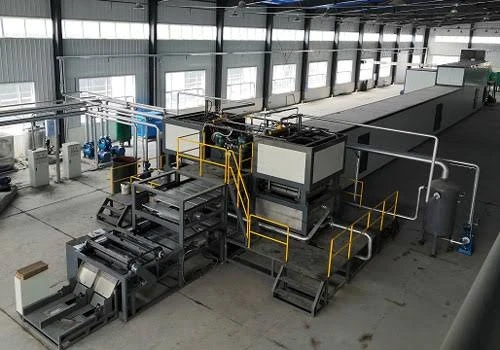
Match Forming Capacity with Drying Requirements
The forming machine and drying system must work at compatible capacities. If the dryer cannot process wet trays at the forming machine's output rate, trays may accumulate between stages and reduce overall efficiency.
Drying requirements depend on tray dimensions, moisture content, production speed, available energy, and workshop layout.
When planning a new line, consider:
- Forming output and wet-tray transfer.
- Required drying capacity and processing time.
- Available fuel and power sources.
- Equipment access and product movement space.
For an existing workshop, assess the current drying capacity before adding a higher-capacity forming machine.
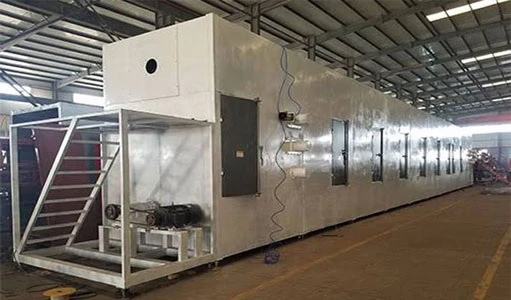
Explore AGICO's Drying Equipment range for related equipment information.

FAQ
Can one machine produce different seedling tray sizes?
This depends on the forming area, mold compatibility, and product requirements. Where interchangeable molds are supported, compatible tray designs may be produced by changing the tooling.
Is mold quantity the same as the number of cells in a tray?
No. Mold quantity refers to the machine's tooling configuration. The number and arrangement of cells in an individual tray depend on its product design and corresponding mold.
Can the machine be integrated with existing drying equipment?
Potentially. Forming output, wet-tray transfer, product dimensions, and available drying capacity should be evaluated together before integration.
What information is needed for a machine quotation?
Provide a tray sample or drawing, target production capacity, raw material, available energy sources, and factory details if available. These details help determine suitable equipment and mold requirements.
Planning Your Seedling Tray Manufacturing Project?
The right equipment configuration starts with your tray design and production target.
Send AGICO your tray sample or drawing, target hourly capacity, preferred raw material, and available energy sources. We can assess the mold requirements and help identify a suitable forming machine and drying arrangement.
Request a Machine Configuration and Quotation
Hot Tags: seedling tray manufacturing machine, China seedling tray manufacturing machine manufacturers, factory, egg tray mold, nursery tray forming machine, plastic seedling tray making machine, seedling tray making machine


