

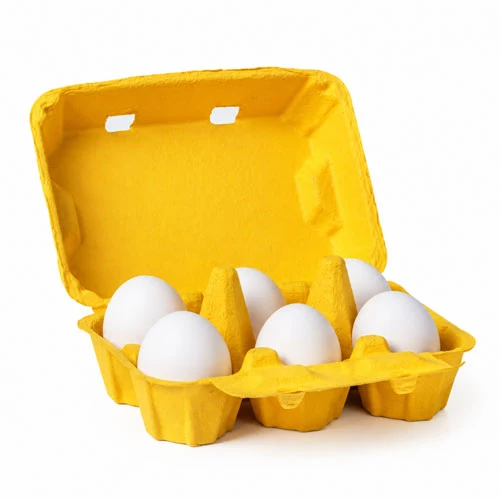
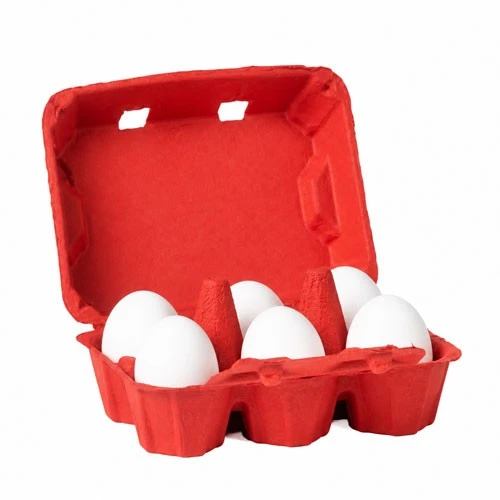
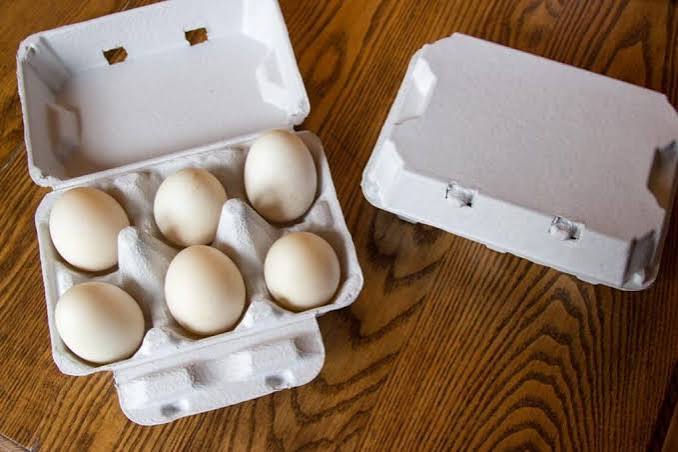
Turkey egg cartons are not a "standard chicken carton with bigger pockets"
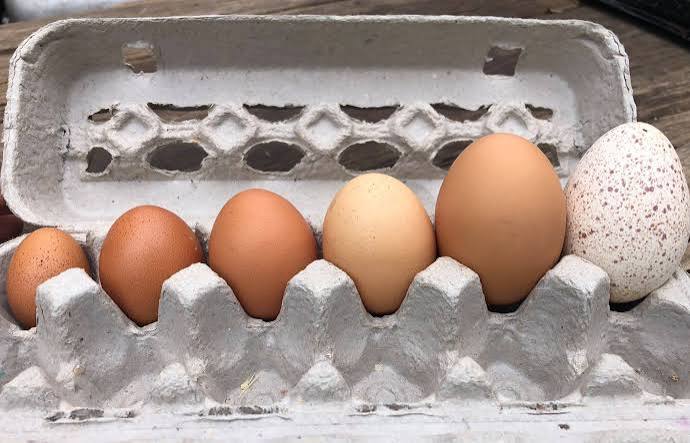
Turkey eggs vary more in length and width than most buyers expect, and the pointed end is often more pronounced than on chicken eggs. A carton that closes cleanly on an average sample can press against the shell on the larger eggs in the same batch, or leave the smaller eggs loose in the pocket.
If you are planning turkey egg carton production - whether as a new line or a mold change on an existing machine - the starting point is not a catalogue format. It is your actual egg dimension distribution and the carton format you intend to produce.
Don't have complete dimension data or machine models yet? No problem.
Just send us a photo or a simple sketch of your target carton, and our engineers can provide a preliminary feasibility assessment and selection direction.
Start with egg dimensions, not a pocket count
Variations occur across different breeds, ages, and samples. The mold needs to accommodate your actual egg distribution, not a single average figure.
What the mold needs is not one number, but the spread of your egg population:
| What to measure | Why it affects the mold |
| Length range (smallest to largest) | Determines pocket depth and whether the lid closes without pressing the shell |
| Widest diameter range | Determines pocket opening and lateral support |
| Shape at the pointed end | Influences whether the egg seats without wobble |
| Shell irregularities / speckling | Not a mold dimension, but relevant to handling and visual grading expectations |
If you only send one "representative" egg, the mold can be optimised for that egg and underperform on the rest of the batch. Send representative samples that actually cover the smallest and largest sizes you intend to pack.
What a turkey egg carton mold has to solve differently
1
The pocket must support the egg at a stable line on the shell without concentrating load on the pointed end. Because turkey eggs are generally longer and more tapered than chicken eggs, the seat line and pocket curvature need to be reviewed together - not judged from an empty carton.
2
Lid clearance is not just an empty-carton dimension. Once the carton is filled and stacked, the lid must still clear the tallest eggs in the batch. This is why filled-sample review is part of mold specification, not an afterthought.
3
A deeper pocket or taller lid changes the hinge geometry and the closing force. A closure that works on a shallow chicken egg carton may not hold securely once the carton is deeper. The hinge area and closing detail need to be confirmed with the intended pocket depth.
4
A turkey egg carton can be produced in tray-style flats or hinged-lid cartons, and in formats ranging from 6-cell retail packs to 20-cell, 25-cell, or 30-cell layouts. The pocket count is not a free choice - it has to match the forming area and mold mounting of the machine you intend to use, or the machine you plan to buy.
If you already have a pulp molding machine
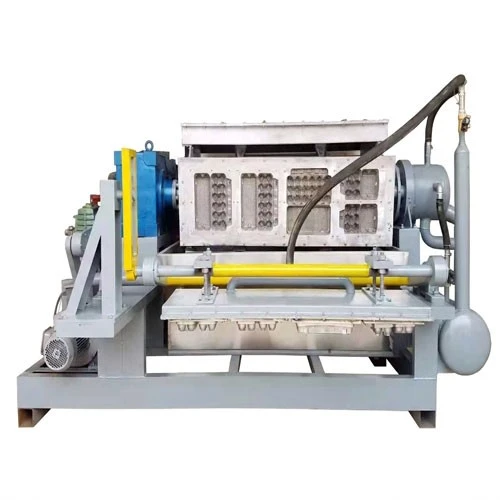
A turkey egg carton project on an existing line is usually a mold-scope discussion, not a full-line discussion. The key question is whether the new mold can be mounted and run on your current platform.
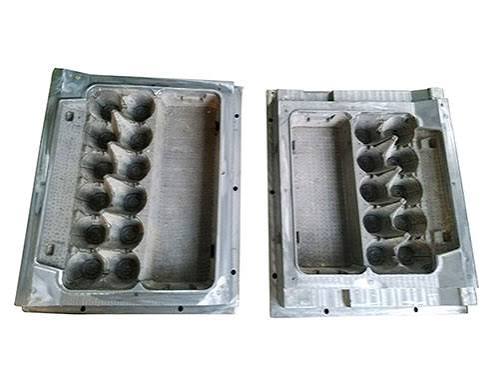
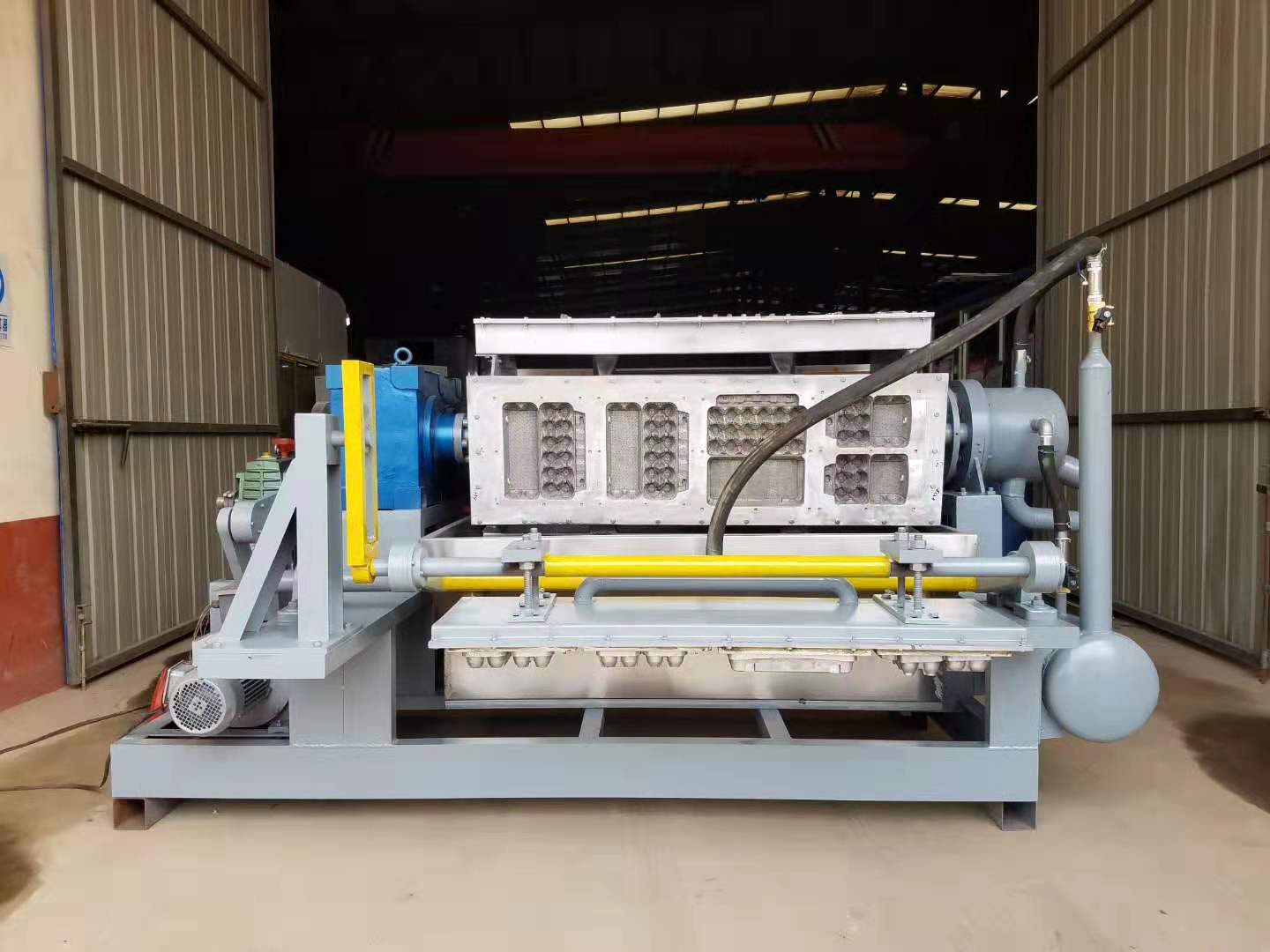
Provide these details with your inquiry:
- Machine model and manufacturer
- Mold plate dimensions and mounting-hole pattern
- Vacuum port position and transfer method
- Maximum product height your machine can handle
- Whether you currently run quick-change molds or fixed mold sets
Machines built around standardized mold mounting and quick-change interfaces can switch between carton formats with less mechanical changeover. But compatibility is confirmed from drawings and machine interface data, not from a photograph of a similar machine.
If you are planning a new turkey egg carton production line

For a new line, the carton design and the machine configuration have to be developed together. The pulp preparation, forming, drying and any hot-press or stacking steps all interact with the carton format. A deeper or taller turkey egg carton may affect drying uniformity and stacking density, which in turn affects the drying arrangement and downstream handling.
A practical sequence is:
Egg samples and target carton format - smallest/largest eggs, pocket count, open tray or closed carton.
Mold drawing review - pocket profile, lid clearance, hinge and closure, cavity layout.
Machine interface check - mounting, forming area, product height, transfer and drying route.
Pulp and drying review - wall thickness target, drying method, finishing requirement.
Quotation and scope definition - mold only, mold + machine, or complete line.
What to send for a turkey egg carton mold or machine quotation
To keep the discussion specific rather than generic, send:
- 3–5 egg samples covering the smallest and largest eggs you intend to pack, or measured length/width ranges if samples cannot be shipped.
- Carton sample or drawing if you already have a format in mind; if not, state the pocket count and whether you want an open tray or a closed carton.
- Machine information if you have an existing line: model, mold mounting data, maximum product height.
- Target output in pieces per hour and the number of carton sizes you intend to run on the same platform.
- Drying preference and any workshop space or utility constraints.
A photograph of a turkey egg carton is useful as a reference for shape discussion, but it does not replace the egg dimensions and machine interface data needed for a mold quotation.
Ready to Plan Your Turkey Egg Carton Production Project?
From custom carton molds to complete pulp molding production lines, our team will help you confirm everything from egg dimensions and carton design to equipment selection to ensure a successful setup.
FAQ
Q: Can we use a standard chicken egg carton mold for turkey eggs?
Not without reviewing the pocket profile and lid clearance against your actual turkey egg dimensions. Turkey eggs are generally longer and wider than chicken eggs, and the pointed end is often more pronounced. A chicken mold may physically form a carton, but the fit on your egg population needs to be confirmed from samples.
Q: Can one machine run both turkey egg cartons and standard egg cartons?
In many cases yes, provided the molds share compatible mounting dimensions and the machine's product-height range covers the taller turkey carton. The changeover scope depends on the machine design and whether transfer and drying components also need adjustment.
Q: How long does a custom turkey egg carton mold take?
Mold customization cycles vary with cavity count, hinge/closure complexity and machine interface requirements. A standard customization cycle is often in the range of 15–30 days after the mold drawing is confirmed, but the actual schedule should be confirmed against the specific design and project timeline.
Hot Tags: turkey egg cartons, China turkey egg cartons manufacturers, factory, apple tray making machine, coffee cup tray mold, diy egg carton mold, nursery tray making machine price, nursery tray manufacturing machine, seed tray making machine price


