

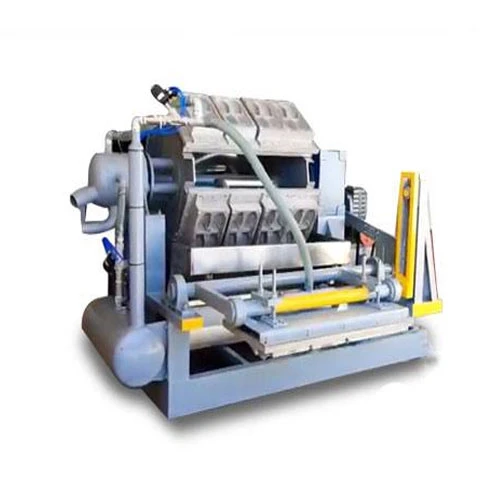


Paper Shoe Tree Making Machine
AGICO Paper Shoe Tree Making Machine is designed to produce molded-pulp shoe trees from prepared paper fiber. The machine uses product-specific forming molds to shape pulp into inserts that help maintain shoe shape during storage, packaging, and transportation.
The suitable machine configuration depends on the required shoe tree dimensions, production capacity, mold arrangement, and drying method. AGICO can provide equipment configurations covering pulp preparation, forming, drying, and product handling for new production projects or existing factories.
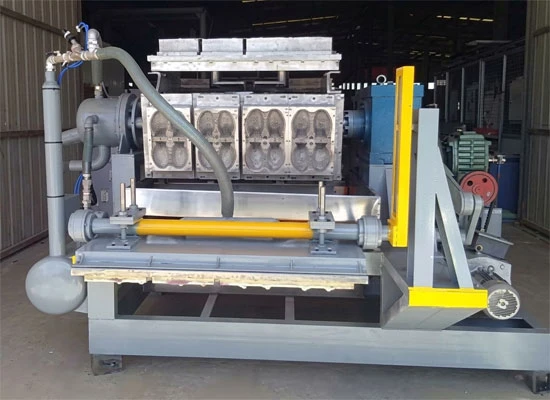
Applications of Paper Shoe Trees
Molded-pulp shoe trees are used in footwear care and packaging applications where internal support is needed to help maintain the shape of shoes.
- Shoe shape support during storage
- Internal support for footwear packaging
- Protection against shape deformation during transportation
- Customized shoe trees for different footwear styles and sizes
Paper Shoe Tree Production Process
Paper shoe trees are produced through several connected stages, from pulp preparation to final inspection. Each stage needs to match the product requirements and planned production capacity.
Paper materials are mixed with water and processed into pulp. The pulp preparation system provides the material needed for consistent forming.
Prepared pulp is drawn onto the forming mold through vacuum suction. The mold determines the shoe tree's shape, dimensions, and main structural features.
After forming, the wet shoe trees are transferred for further processing. The transfer arrangement depends on the selected machine configuration and production line layout.
The wet products pass through a suitable drying system to remove moisture and develop sufficient strength for subsequent handling.
The dried shoe trees are checked for shape and forming quality before being stacked, nested, or packaged according to the product and shipping requirements.

Custom Molds for Different Shoe Tree Designs
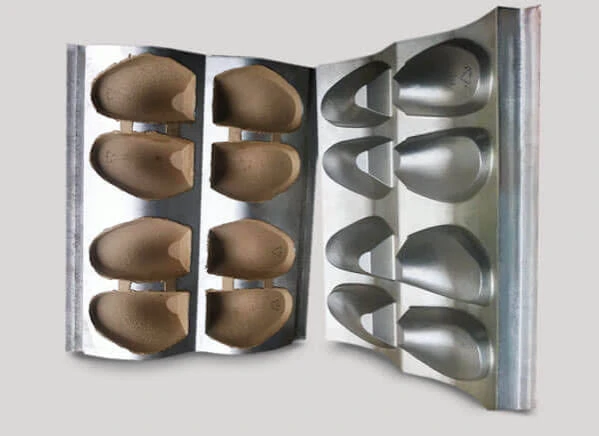
The forming mold is one of the key components of a paper shoe tree making machine. Its design determines the product's shape and dimensions, making mold selection important when producing shoe trees for different footwear styles.
AGICO evaluates mold requirements according to the following factors:
- Product Shape: The mold must match the required shoe tree profile and structural design.
- Size Range: Different shoe sizes or dimensions may require separate mold designs.
- Product Mix: The number of shoe styles and sizes affects mold quantity and production scheduling.
- Machine Compatibility: The mold must match the forming machine's structure and operating arrangement.
Paper Shoe Tree Making Machine Specifications
AGICO offers machine configurations with listed production capacities ranging from 1,000 to 5,000 pieces per hour. The appropriate configuration depends on the required output, mold arrangement, product dimensions, and supporting equipment.
| Model | ZMDTF3-1 | ZMDTF4-1 | ZMDT3-4 | BTF-4-4 | ZMDT3-8 | ZMDT-4-8 | ZMDT-5-8 | |
| Production capacity(pieces/h) | 1000 | 1500 | 2000 | 2500 | 3000 | 4000 | 5000 | |
| Forming mould quantity | 3 | 4 | 12 | 16 | 32 | 40 | 60 | |
| Total power (kw) | 34 | 41.2 | 53.7 | 57 | 90 | 150 | 153 | |
| Electricity consumption (kw/h) (70% of the total power) | 23.8 | 28.84 | 37.59 | 39.9 | 63 | 105 | 107.1 | |
| Labor force | 3-5 | 4-6 | 4-6 | 4-6 | 5-7 | 5-7 | 5-7 | |
| Materials consumption (kg/h) | Paper | 85 | 102 | 170 | 212 | 298 | 425 | 459 |
| Water | 255 | 306 | 510 | 636 | 894 | 1275 | 1377 | |
| Fuel consumption | Coal | 50 | 60 | 83 | 104 | 125 | 208 | 208 |
| Natural gas | 22-32 | 26-36 | 37-47 | 46-56 | 56-66 | 92-103 | 92-103 | |
| Diesel | 18-28 | 22-32 | 30-40 | 38-48 | 46-56 | 77-87 | 77-87 | |
The following factors also affect equipment selection:
- Product Specifications: The required shoe tree shape and dimensions.
- Production Targets: Expected hourly output and daily operating hours.
- Mold Configuration: The number of molds and changeover requirements for different products.
- Drying Capacity: Whether the drying system can handle the wet output from the forming machine.
- Utility Requirements: Available electricity, water supply, and suitable fuel sources.
- Factory Space: Space required for equipment installation, layout, and product handling.
Evaluating the forming machine and drying system together helps create a more balanced production line.
Drying Solutions for Paper Shoe Tree Production
Drying is an important stage in molded-pulp shoe tree manufacturing. The appropriate method depends on production volume, available space, local climate, energy supply, and the required level of automation.
Natural Drying
Natural drying uses ambient conditions to remove moisture from formed products. It may suit projects with moderate production requirements, sufficient drying space, and suitable weather conditions. Drying time varies with temperature, humidity, airflow, and product thickness.
Civil Engineering Drying System
A civil engineering drying system may be considered when the factory layout and construction conditions support a site-built drying arrangement. Its suitability depends on the heating method, airflow design, available space, and required production capacity.
Single-Layer Metal Dryer
A single-layer metal dryer may be suitable for production layouts with sufficient floor space and compatible product transfer arrangements. Its drying capacity should be matched to the output of the forming machine.
Multilayer Metal Dryer
A multilayer metal dryer can make use of vertical space and may suit production lines requiring a continuous drying arrangement. The final configuration depends on the dryer design, product characteristics, energy requirements, and target throughput.
| Drying type | Material(kg/h) | Power(kw/h) | Fuel(kg/h) | ||||
| Paper | Water | Coal | Gas(m³/h) | Diesel | LPG | ||
| Natural drying | 170 | 510 | 32.6 | ||||
| Civil engineering | 45.3 | 83 | 37-47 | 30-40 | 30-40 | ||
| Single layer metal | 45.3 | 37-47 | 30-40 | 30-40 | |||
| Multilayer metal | 45.3 | 37-47 | 30-40 | 30-40 | |||
The drying system should be selected according to the required throughput, available floor space, local climate, energy costs, and product handling arrangements. Actual drying performance and energy consumption depend on the selected equipment and operating conditions.
Why Choose AGICO for Paper Shoe Tree Production?
Customized Mold Solutions
AGICO evaluates shoe tree samples, drawings, dimensions, and product variations to help determine suitable forming molds. This allows the machine configuration to be planned around the intended product design.
Coordinated Production Equipment
Pulp preparation, forming, and drying must work together to maintain a balanced production process. AGICO can help configure the required equipment according to the production target and factory conditions.
Capacity-Based Equipment Selection
Machine selection considers more than hourly output. Mold quantity, product dimensions, daily operating hours, and drying capacity all influence the overall production arrangement.
Technical and Project Support
For new production projects and existing factory expansions, AGICO can help assess equipment requirements and production layouts. Technical support can cover equipment configuration, installation guidance, commissioning, and operator training according to project requirements.
FAQ
Q: What raw materials can be used to make paper shoe trees?
A: Waste paper, recycled paper, and other suitable paper fibers can be used to prepare pulp for molded-pulp shoe trees. The choice depends on raw material availability, fiber quality, and the required strength and surface finish. Pulp preparation may need to be adjusted according to the selected material.
Q: Can the machine produce different shoe tree shapes and sizes?
A: Yes. Different shapes and sizes can be produced using appropriately designed forming molds. For projects involving multiple shoe styles or dimensions, the mold requirements and production arrangement should be evaluated before equipment selection.
Q: How many paper shoe trees can the machine produce per hour?
A: The listed machine configurations cover nominal production capacities from 1,000 to 5,000 pieces per hour. Actual output depends on product design, mold configuration, operating conditions, and the overall production line arrangement.
Q: Does the production line require a separate drying system?
A: Drying is an essential stage in molded-pulp production. Depending on the project requirements, the line may use natural drying or a suitable mechanical drying system. The drying capacity should match the forming output to help avoid production bottlenecks.
Q: What information is needed to select a suitable machine?
A: Useful information includes the shoe tree sample or drawing, product dimensions, target hourly output, available raw materials, preferred drying method, and factory conditions. These details help determine the required molds, forming machine, and supporting equipment.
Discuss Your Paper Shoe Tree Production Project with AGICO
Looking for a suitable machine to manufacture molded-pulp shoe trees?
AGICO can help you evaluate the forming equipment, custom molds, and drying solutions required for your production project.
Share your product sample or drawing, target production capacity, and basic project requirements to start discussing a suitable equipment configuration.
Hot Tags: paper shoe tree making machine, China paper shoe tree making machine manufacturers, factory, apple tray mold, shoe tray making machine


