


Brick Kiln Drying System
The AGICO brick kiln drying system is industrial egg tray drying equipment that combines a brick-built drying tunnel with wet-tray conveying, a selected heat source, hot-air movement and line interfaces.
It receives molded paper trays after forming, removes moisture along a continuous route and transfers the dried trays to stacking or packing. Buyers can order the drying section for a new egg tray production line or request an interface review for an existing forming machine.
This dryer suits plants that need weather-independent, continuous drying and can allocate a long, fixed kiln route. The system is engineered around the forming output, tray specification, available fuel and factory layout.
Key Advantages at a Glance
- 40-65 m kiln length options: Choose a reference range around the planned hourly output and available workshop length.
- 1,000-10,000 pieces/hour reference capacity: Match the egg tray dryer to small, medium or high-output forming lines.
- Weather-independent drying: Maintain planned production without relying on outdoor sun and weather conditions.
- Multiple fuel configurations: Evaluate coal, gas, diesel or LPG according to local availability and the selected heat-source design.
- Integrated line interfaces: Coordinate wet-tray transfer, kiln conveying, discharge and downstream handling as one production flow.
- Site-based engineering: Arrange the kiln, heat-source area, access space and conveyor route around the factory layout.
How the Brick Kiln Drying System Works

Freshly formed molded-pulp trays are wet and fragile. A transfer device places them on the configured conveying route, which carries them into the brick drying tunnel.
The heat source supplies the required thermal energy, while the airflow arrangement distributes hot air through the drying passage and removes evaporated moisture.
Dried trays leave the outlet for collection, stacking or packing.
Brick Kiln Drying Process
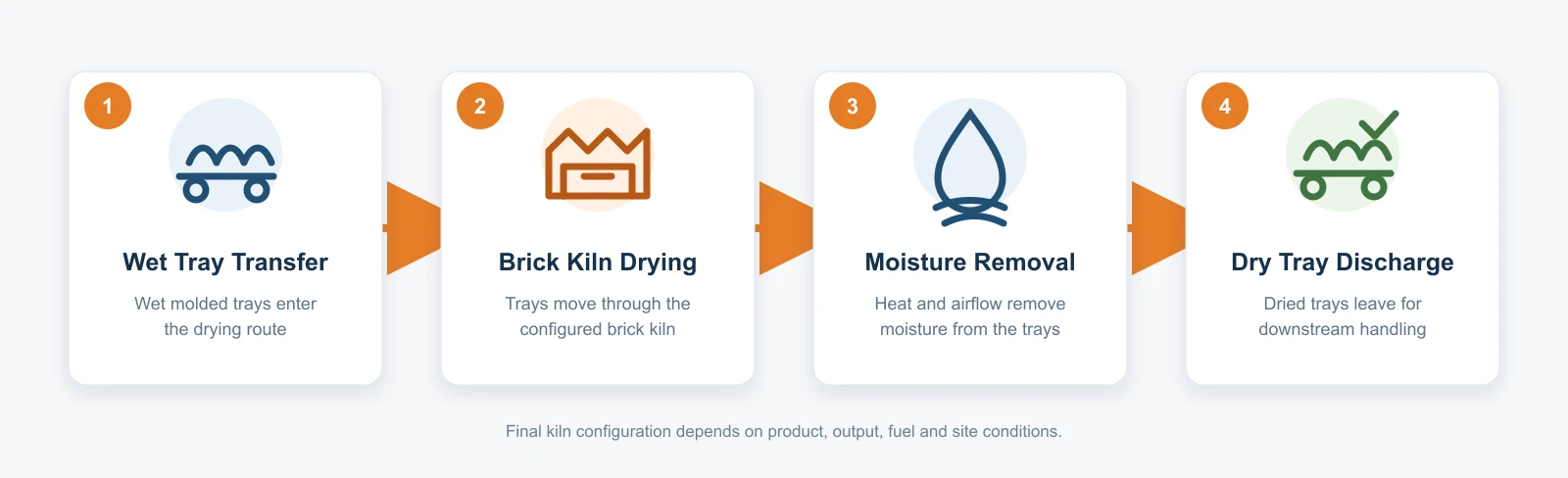
The process moves wet molded trays into the kiln and dries them with controlled heat and airflow.
Moisture is removed through the drying passage, and the dry trays are discharged for downstream handling.
Specifications of Brick Kiln Drying System
| Drying System | Length(m) | Output(p/h) |
|---|---|---|
| Brick kiln drying system | 40-45 | 1000-2000 |
| 50-55 | 2000-4000 | |
| 60-65 | 4000-10000 |
| Production Line Model | Material Consumption | Power (KW/h) | Fuel | ||||
|---|---|---|---|---|---|---|---|
| Paper (Kg/h) | Water (Kg/h) | Coal (Kg/h) | Gas (m³/h) | Diesel (Kg/h) | LPG (Kg/h) | ||
| CTDT-1000T | 85 | 255 | 36.1 | 50 | 22-32 | 18-28 | 18-28 |
| CTDT-1500T | 102 | 306 | 38.6 | 60 | 26-36 | 22-32 | 22-32 |
| CTDT-2000T | 170 | 510 | 45.3 | 83 | 37-47 | 30-40 | 30-40 |
| CTDT-2500T | 212 | 636 | 46.8 | 104 | 46-56 | 38-48 | 38-48 |
| CTDT-3000T | 255 | 765 | 88.9 | 125 | 56-66 | 46-56 | 46-56 |
| CTDT-4000T | 340 | 1020 | 91 | 160 | 67-77 | 55-65 | 55-65 |
| CTDT-5000T | 424 | 1272 | 100 | 185 | 82-92 | 67-77 | 67-77 |
| CTDT-6000T | 510 | 1530 | 105 | 208 | 92-103 | 77-87 | 77-87 |
Brick Kiln vs. Natural Drying vs. Metal Dryer
The right egg tray drying machine depends on production scale, climate, available floor space, automation target and investment plan.
This comparison helps buyers choose the most suitable direction before requesting a detailed layout.
| Factor | Brick Kiln | Natural Drying | Metal Dryer |
|---|---|---|---|
| Production mode | Continuous heated drying | Manual or batch outdoor drying | Continuous automatic drying |
| Weather dependence | Low | High | Low |
| Space profile | Long fixed kiln route | Large open drying area | Compact options, especially multilayer |
| Site work | Brick civil construction plus equipment | Drying ground or racks | Prefabricated metal equipment installation |
| Fuel / energy | Coal, gas, diesel or LPG options | Sun and natural airflow | Fuel and electrical systems by dryer type |
| Best fit | Plants seeking continuous output with available kiln length | Lower-output plants in suitable climates | Automated plants or sites prioritizing space efficiency |
Fuel and Project Configuration
Fuel selection affects the heat-source arrangement, workshop layout and operating plan.
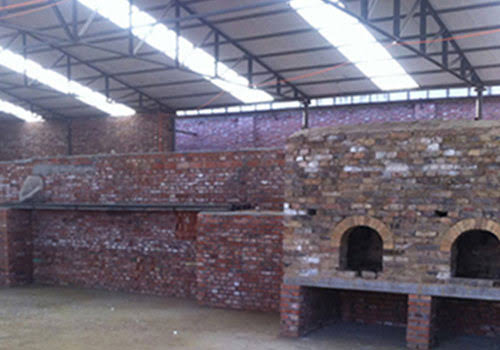
Coal may suit sites with established solid-fuel handling; gas, diesel or LPG can be considered where those fuels are available and practical.
The photograph shows a coal-fired heat source. The selected proposal will show the equipment for the buyer's chosen fuel.

Installation and Solution Scope
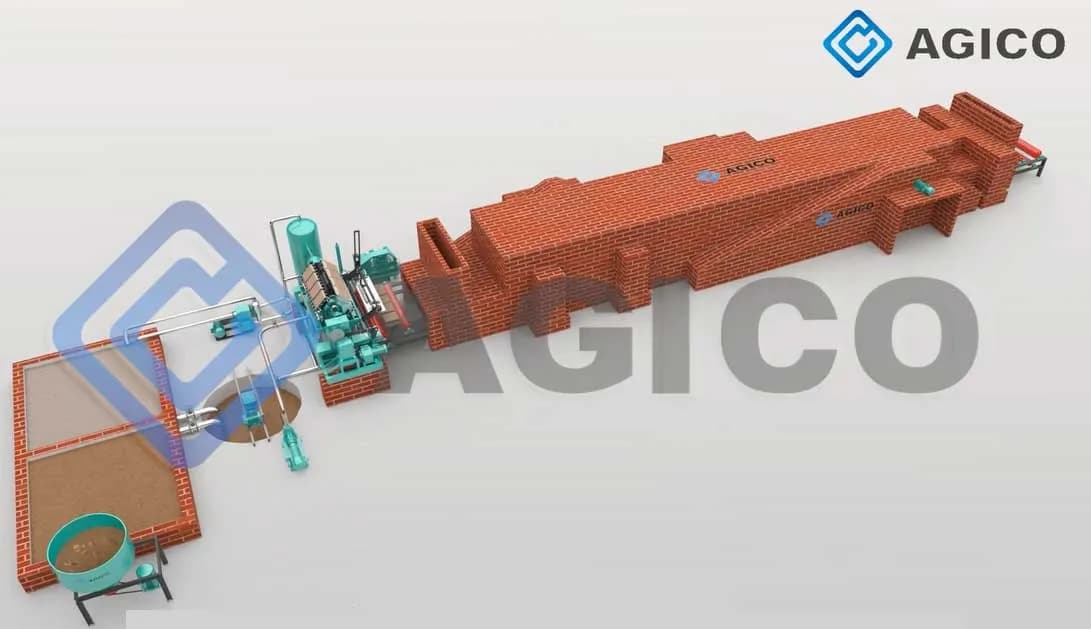
The project layout coordinates the forming-line handoff, kiln entrance and outlet, heat-source and airflow equipment, operating access and downstream handling.
It also defines the equipment supplied, connection requirements, layout dimensions and local civil-work responsibilities.
From Requirements to Drying Proposal
- Step 1 - Send your requirements: Share target output, tray specification, available fuel and workshop dimensions.
- Step 2 - Review capacity and tray: The forming output and molded-tray details are checked against the drying demand.
- Step 3 - Select kiln and heat source: A preliminary kiln-length band, fuel option and conveying concept are selected.
- Step 4 - Confirm layout and scope: Review the factory arrangement, interfaces, equipment list and civil-work boundary.
- Step 5 - Receive proposal and quotation: Receive the technical configuration and commercial quotation for review.
Get the Right Level of Support
Choose the Support Level You Need
Start with a preliminary kiln recommendation or send complete project details for a technical quotation.
Get a Preliminary Configuration
For a faster response, include target output, tray specification, available fuel and workshop dimensions.
Explore related equipment: Egg Tray Production Line, Egg Tray Making Machine, Egg Tray Dryer, Natural Drying Equipment, Multilayer Metal Dryer.
FAQ
Q: How much does a brick kiln drying system cost?
A: Price depends on output, kiln length, fuel system, conveying arrangement, automation and the equipment included. Send the target capacity and factory length for a preliminary configuration; add fuel and layout information when you are ready for a full quote.
Q: How much workshop space is required?
A: The kiln itself uses a long fixed route: the reference lengths are 40-45 m, 50-55 m and 60-65 m. Additional room is needed for the forming interface, heat source, operating access and tray discharge, so send usable length, width and height for layout review.
Q: Can the kiln be customized?
A: Yes. Kiln length, conveying arrangement, fuel configuration and interfaces can be selected around target capacity, tray specification and available factory space.
Q: Can the brick kiln dryer operate continuously?
A: It is intended for continuous drying with a matched conveying route. Continuous line performance depends on coordinated forming output, tray transfer, heat supply and downstream handling.
Q: Can the drying system be matched with an existing egg tray forming line?
A: Yes, subject to an interface review. Share the forming-machine model and output, wet-tray transfer method, available kiln route and downstream handling so the connection points can be planned.
Hot Tags: brick kiln drying system, China brick kiln drying system manufacturers, factory, compressed air dryers and filters, egg carton maker, food wrapping machinery, heat shrink packaging machine, industrial air dryer systems, ready to eat food packaging machine


